

TAKE Tableau Desktop Specialist TDS-C01 PRACTICE QUESTIONS FOR AMAZING RESULTS
Tableau TDS-C01 Exam Dumps Are Essential To Get Good Marks
Tableau TDS-C01 (Tableau Desktop Specialist) Exam is designed to test the proficiency of candidates in using Tableau Desktop to analyze and visualize data. Tableau Desktop is a powerful data visualization tool that enables users to connect to various data sources, create interactive dashboards and reports, and share insights with stakeholders. TDS-C01 exam aims to validate the skills and knowledge required to use Tableau Desktop effectively and efficiently.
NEW QUESTION # 116
What is the one critical difference between normal calculated fields, and the calculated fields created after Data blending?
- A. The calculated fields created in Blends cannot be edited once created
- B. Fields used in Blends must first be aggregated
- C. The calculated fields created in Blends cannot use more than 2 fields
- D. No difference, calculated fields cannot be created in Blends
Answer: B
Explanation:
Explanation
Yes, due to the nature of blends, there are some conditions as follows from the official documentation that must be kept in mind while working with blends: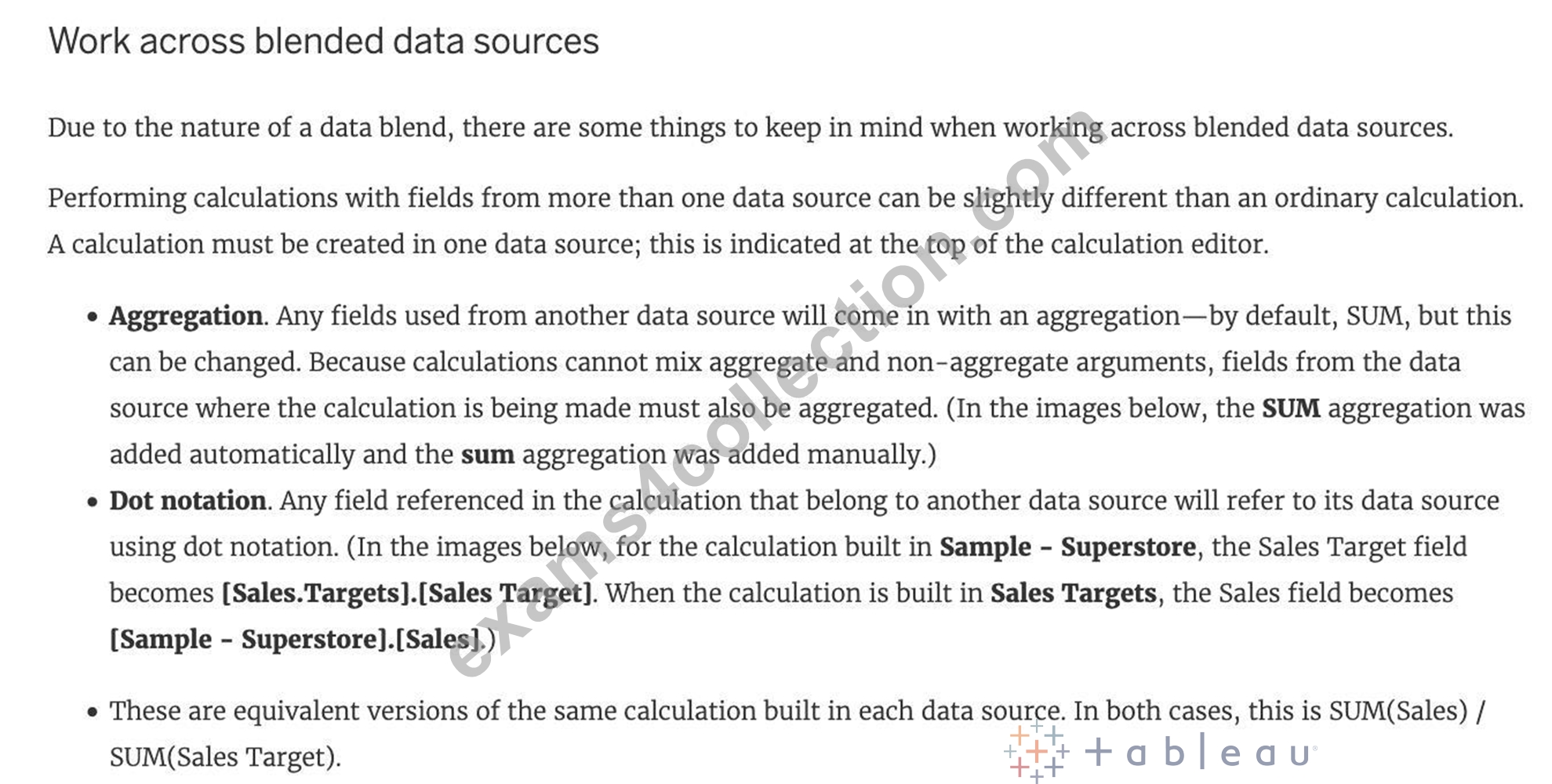
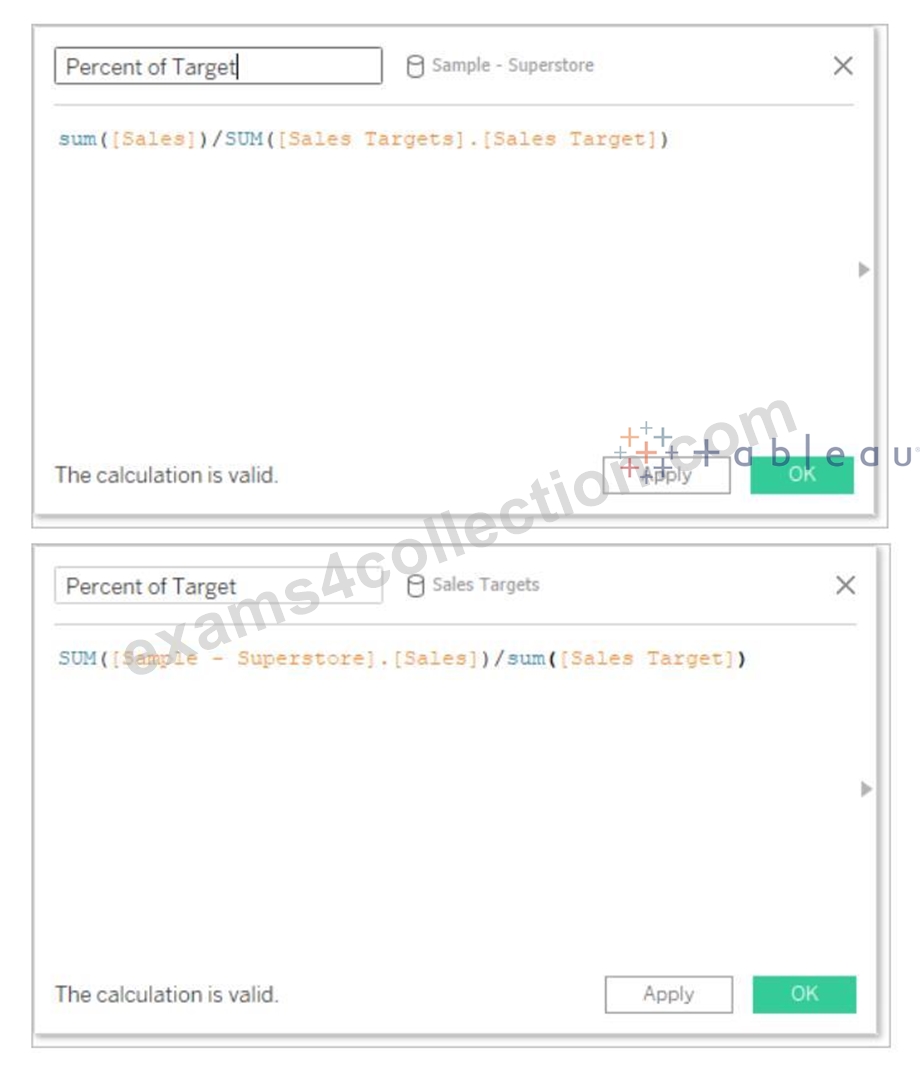
In addition to handling calculations slightly differently, there are some limitations on secondary data sources.
You may not be able to sort by a field from a secondary data source, and action filters may not work as expected with blended data. For more information, see Other data blending issues.
NEW QUESTION # 117
Which of the following is a compelling reason to export a sheet in Tableau to a PDF?
- A. If we want a static view of the visualisation.
- B. If we want to dynamically enter parameters to the visualisation.
- C. If we want to use filters in the visualisation.
- D. If we want to interact with the visualisation.
Answer: A
Explanation:
Explanation
Exporting the visualisation gives us a static view of the visualisation.
It is NOT possible to interact with it, use filters, or dynamically enter anything in a visualisation exported PDF.
In Tableau Desktop, you can save views as PDF files rather than printing them as hard copies. You do not need to have Adobe Acrobat installed on your computer.
When you print an individual sheet to PDF, filters in the view are not included. To show filters, create a dashboard containing the sheet and export the dashboard to PDF. (IMPORTANT)
NEW QUESTION # 118
True or False: To concatenate fields, they must be of same data type
- A. True
- B. False
Answer: A
Explanation:
Yes! To concatenate fields, they must be of same data type. However, there is a workaround which we can use - Type casting. See below:
Here, State and City are Strings, but Postal Code? Nope. It's an Integer. So we can simply use the STR() function to convert it into a String, and hence the entire equation becomes valid!
NEW QUESTION # 119
Suppose you create a bar chart by dragging a dimension to the Column shelf and a measure to the Rows shelf. Which of the following would create a stacked bar chart?
- A. By dragging another measure to the Columns shelf
- B. By dragging another dimension to Color on the Marks card
- C. By dragging another dimension to the Rows shelf
- D. By dragging another measure to Color on the Marks card
Answer: B
Explanation:
Very important question for the exam and appears quite a lot too.
The correct answer is - By dragging another dimension to Color on the Marks card.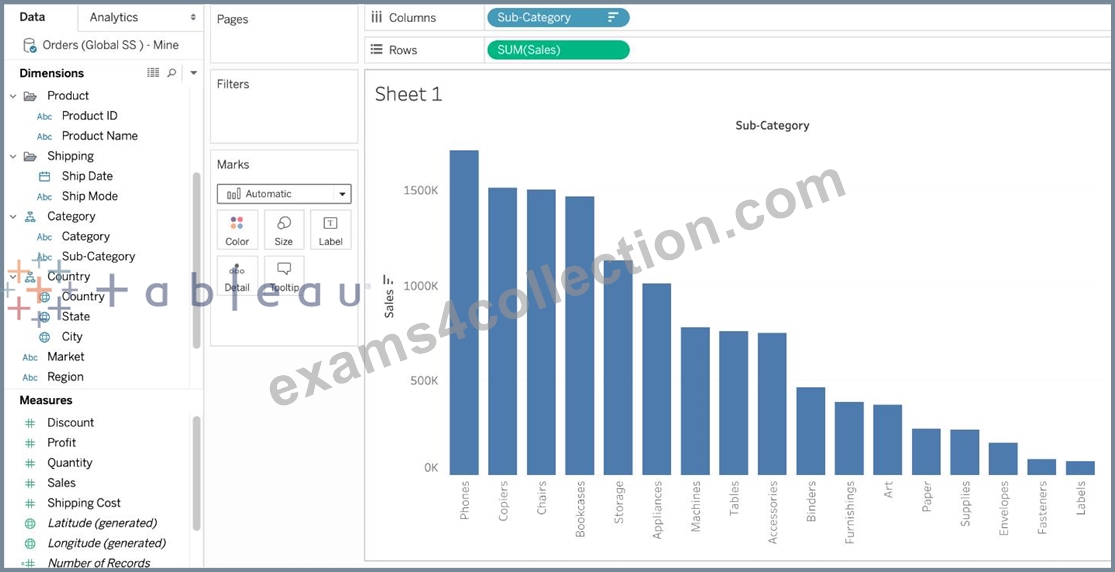
This is what the question says we have already created. Now to convert this into a Stacked bar chart, we will drop another dimension on Color in the Marks card.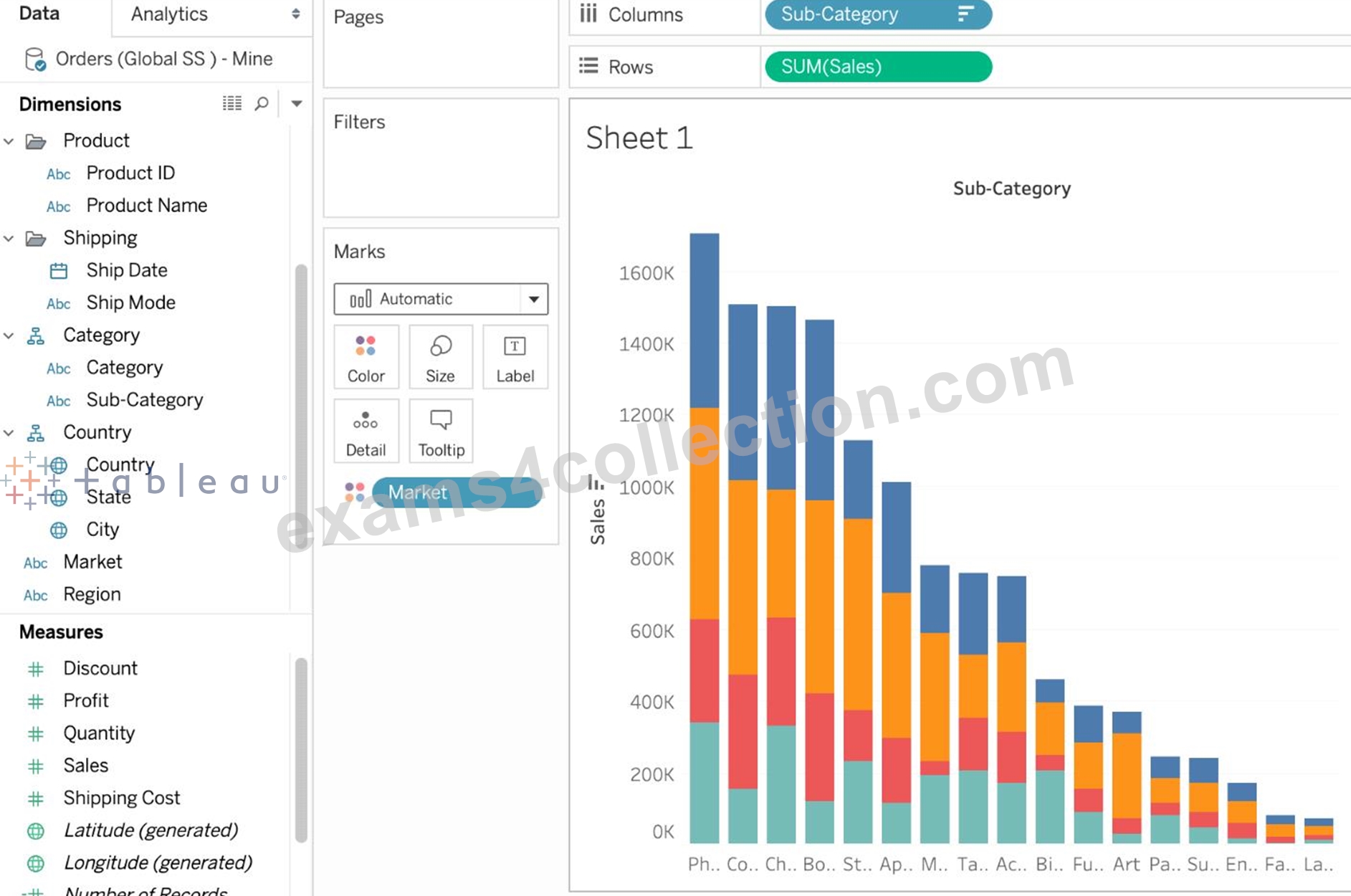
The rest won't create stacked bar charts, and hence are incorrect choices. The best way to answer such questions on the real exam is to quickly do what the options say and see if they satisfy the requirements in the question.
NEW QUESTION # 120
If you see the following Filter, then you're working with _______________________ Larger image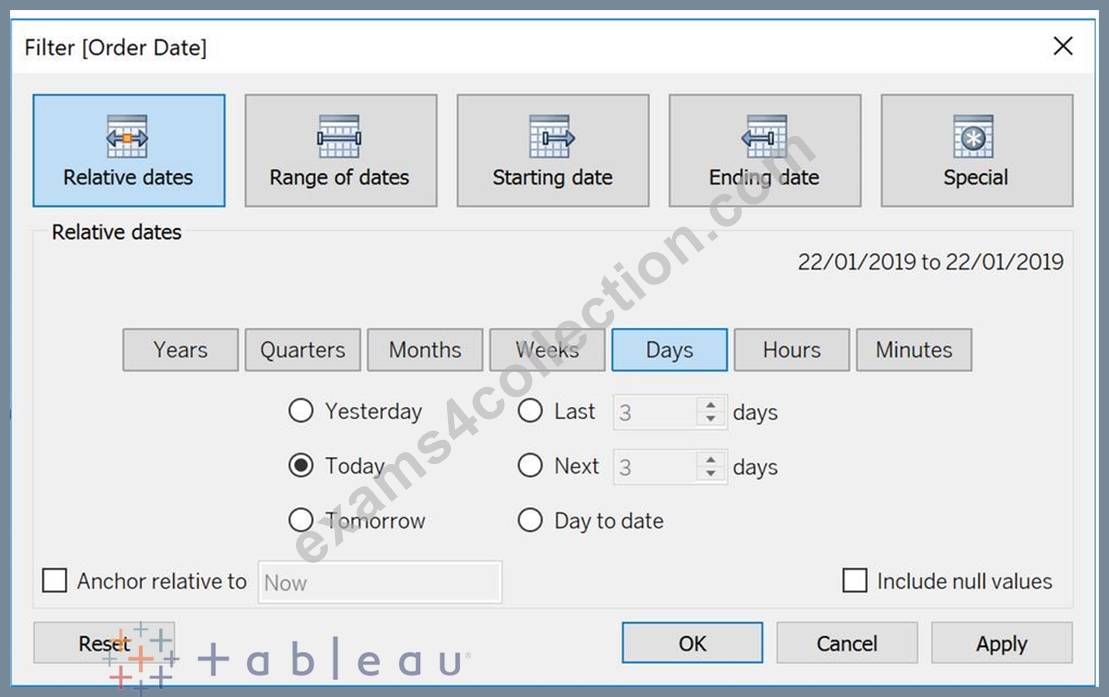
- A. Grouped Dates
- B. Date Values
- C. Date Functions
- D. Date Parts
Answer: B
Explanation:
Explanation
Dates in Tableau will behave differently depending on whether they are a Datepart (blue) or a Datevalue (green). This affects how the axes display/behave and also how visualisations such as line charts will display.
The difference essentially boils down to Dateparts behaving like a dimension as opposed to a measure which is how Datevalues behave. This means that Dateparts behave like discrete categories on the view whereas Datevalues are more like continuous numeric values.
Dateparts are discrete and they behave the same as dimension filters. If all dates are used on the filter then each individual date will be a datepart that can be selected/excluded. This is the same for each level of date, if datepart months is placed on filters January to December will be tick-able options in the filter. This also means that conditions and top/bottom filters can be applied to datepart filters like any other dimension filter.
Datevalues placed on filters behave like measure filters. A min and a max date can be set and there is a relative dates option which allows you to choose things like only show the previous 3 months or years etc.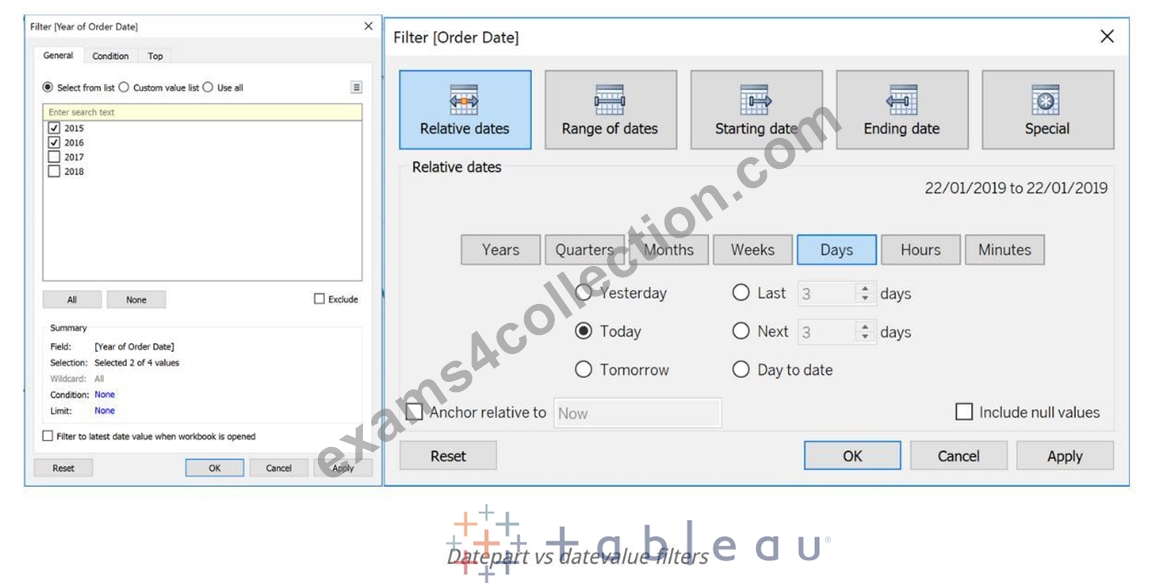
NEW QUESTION # 121
When using the manage metadata option, we can create custom names for columns where _____________ is the original name of the column whereas _____________ is the custom name we created in Tableau.
- A. Local Field, Global Field
- B. Remote Field Name, Field Name
- C. Local Name, Actual Name
- D. Column Name, Actual Name
Answer: B
Explanation:
Using the Sample superstore as a reference, click on the manage metadata icon as follows: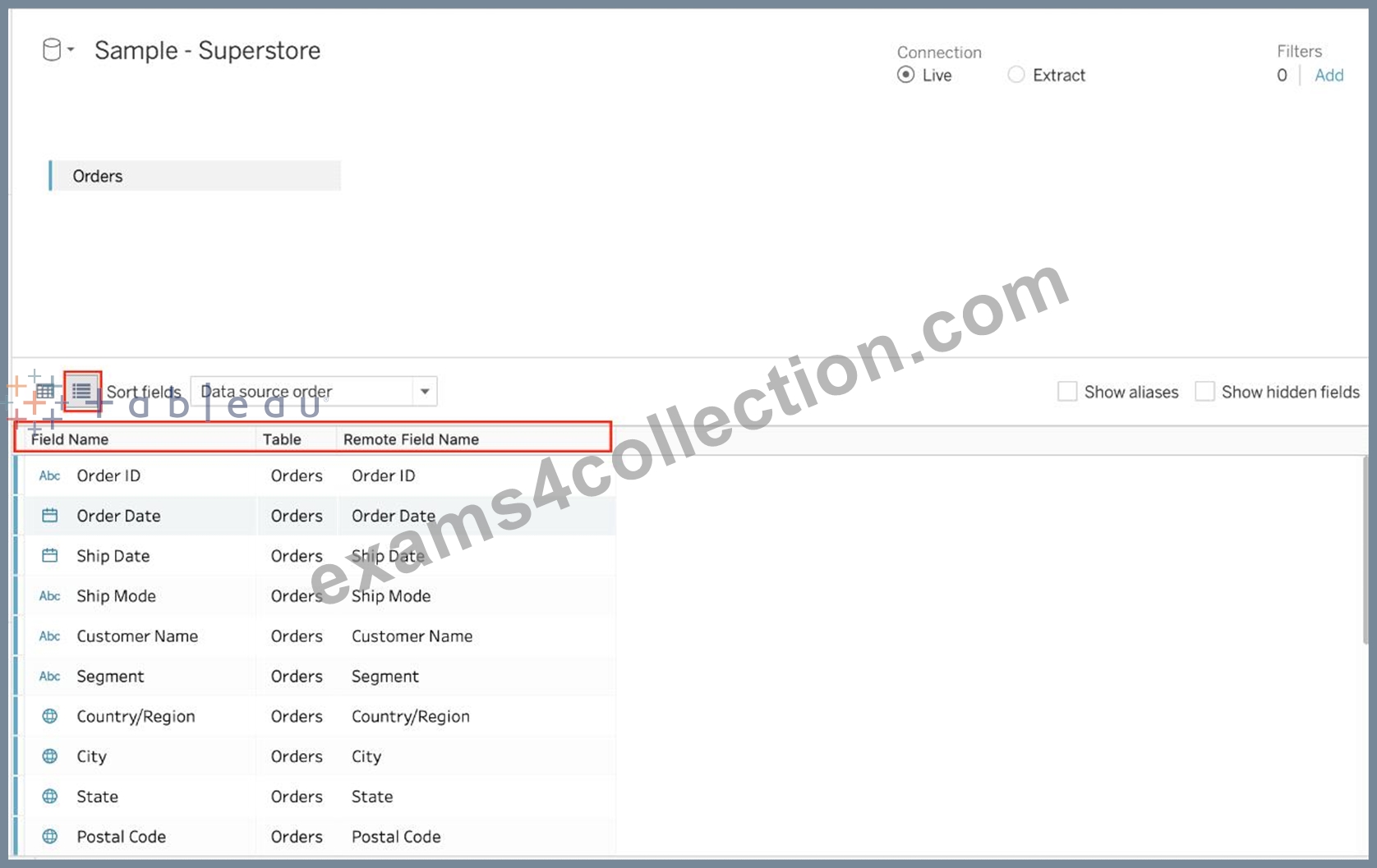
We can rename a particular column name to make it easier to remember and use in Tableau. Let's change Order ID to oID as shown: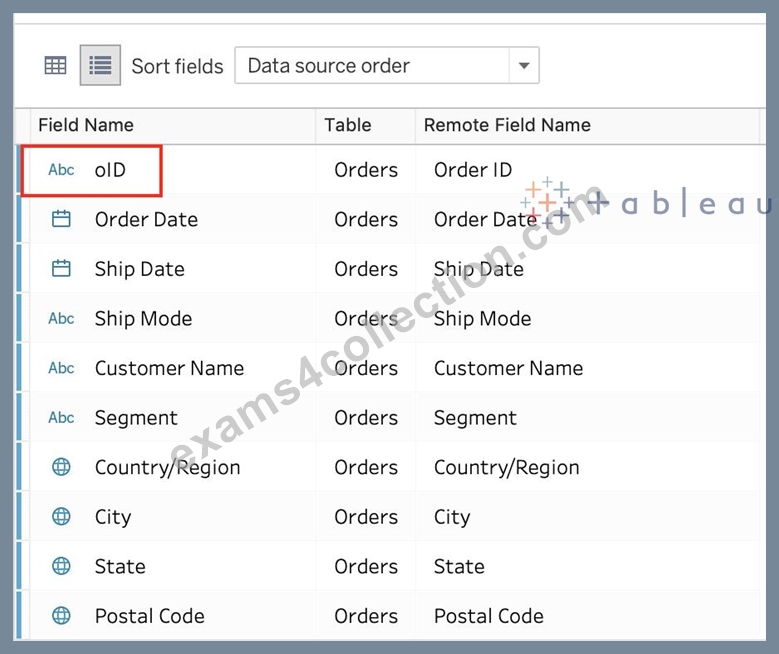
Now, we'll see oID when using this data source in Tableau. This WILL NOT affect the original data source. The remote field name let's us see what the name of the column is in the ORIGINAL Data source.
NEW QUESTION # 122
You clicked Sheet 1 from the data source page, and now you have opened the Tableau Desktop workspace as shown above. What is the main thing that you do here?
- A. Preview the data
- B. Create visualisations to analyze your data
- C. Clean the data
- D. Rename the fields and change data types
Answer: B
Explanation:
The Tableau workspace consists of menus, a toolbar, the Data pane, cards and shelves, and one or more sheets. Sheets can be worksheets, dashboards, or stories. For details on dashboard or story workspaces, see Create a Dashboard or The Story Workspace.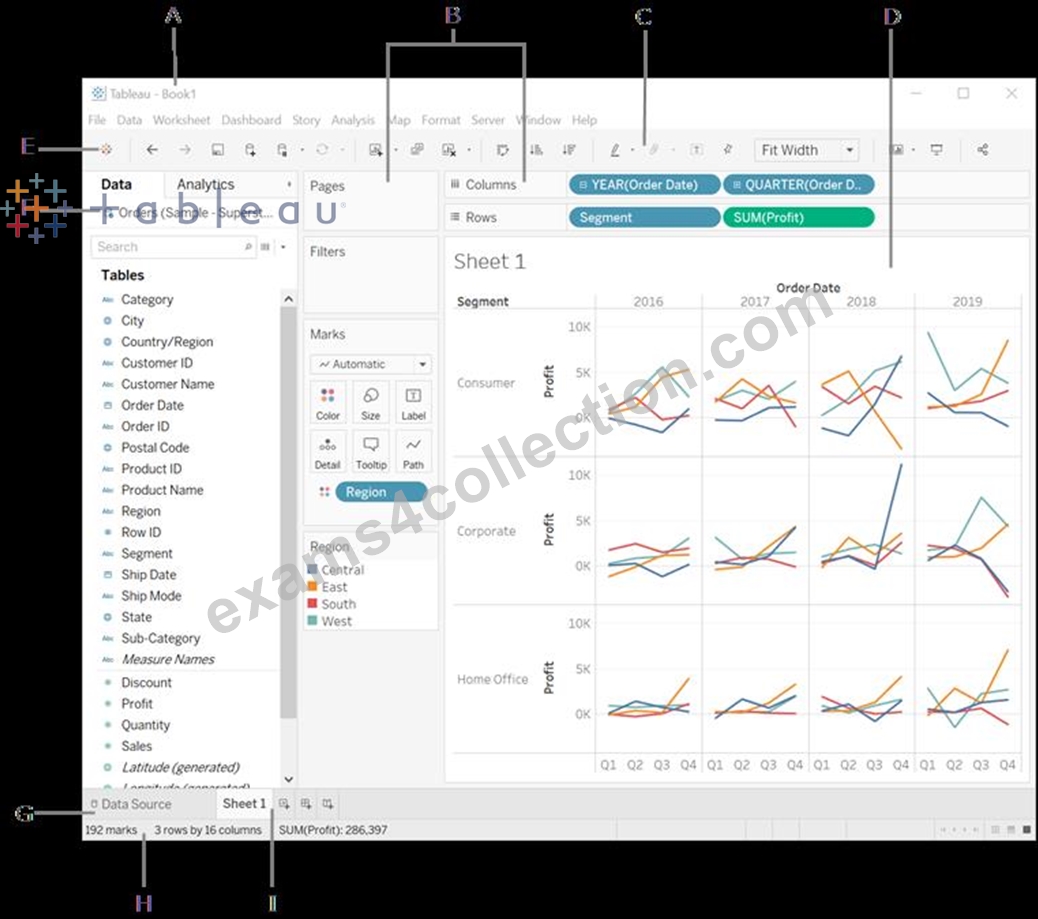
The main thing you do in the workspace is to create visualisations to analyze your data.
Renaming data fields, cleaning the data, previewing the data can all be done in the Data source window.
NEW QUESTION # 123
Which of the following are interactive elements that can be added to a dashboard for users?
- A. URL Action
- B. Highlight Action
- C. Filter Action
- D. Edit Tooltip Action
Answer: A,B,D
Explanation:
Explanation
We can perform filter, URL and highlight actions out of the above given choices on a dashboard. Please refer to the image below: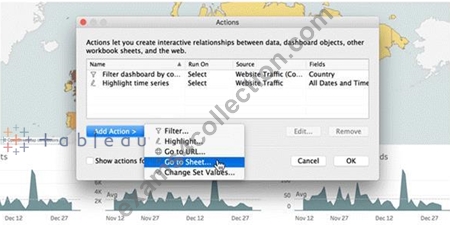
NEW QUESTION # 124
What are three options to change the scope of a reference line? Choose three.
- A. Maximum
- B. Per Cell
- C. Entire Table
- D. Fill Above
- E. Per Pane
Answer: B,C,E
Explanation:
You can change the scope of a reference line by choosing one of the following options: Per Pane, Entire Table, or Per Cell. The scope determines how many reference lines are added to the view and how they are calculated. Per Pane adds one reference line for each pane in the view. Entire Table adds one reference line for the entire table in the view. Per Cell adds one reference line for each cell in the view
NEW QUESTION # 125
Suppose I have the following view. What will be the total number of marks if I drag a new measure to the row shelf vs the column shelf?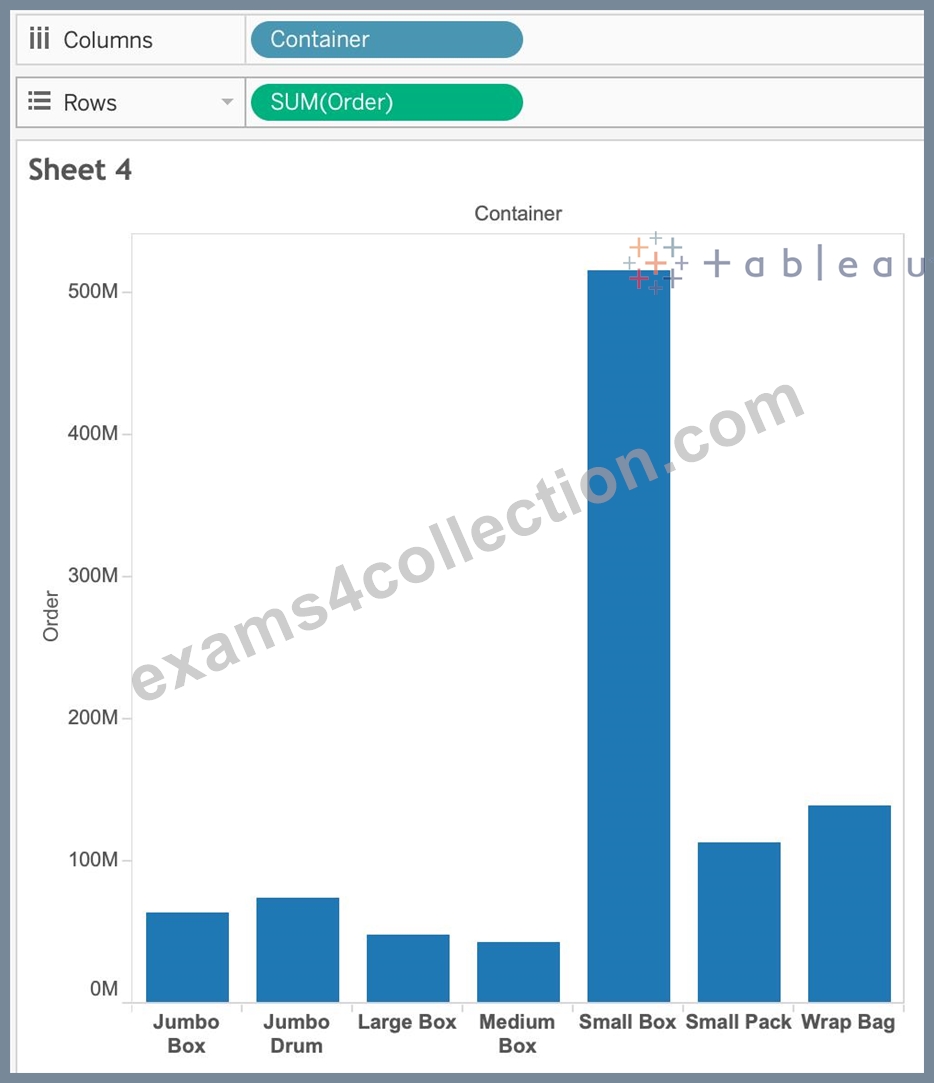
- A. If dragged to row shelf : 14 marks ; If dragged to column shelf : 14 marks
- B. If dragged to row shelf : 7 marks ; If dragged to column shelf : 7 marks
- C. If dragged to row shelf : 7 marks ; If dragged to column shelf : 14 marks
- D. If dragged to row shelf : 14 marks ; If dragged to column shelf : 7
marks
Answer: D
Explanation:
This is a tricky question often asked in the exam.
If we drag a new measure to the row shelf, the following happens:
We now have 2 rows, and the same 7 columns for both these rows. Therefore, 2x7 = 14 marks!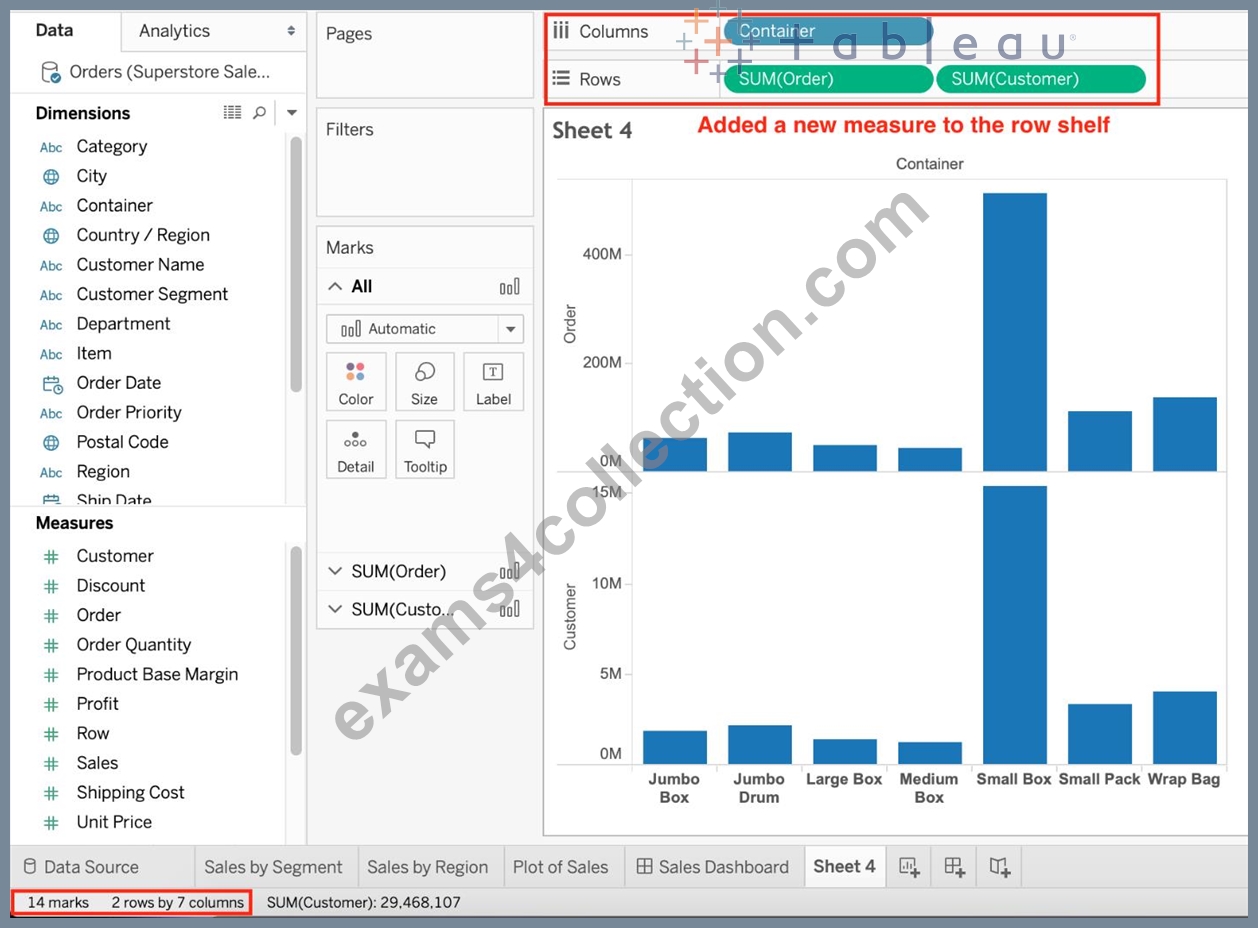
But if we drag the same measure to the column shelf, we have just 1 row and a chart created for each of the columns. So (1x7) = 7 marks!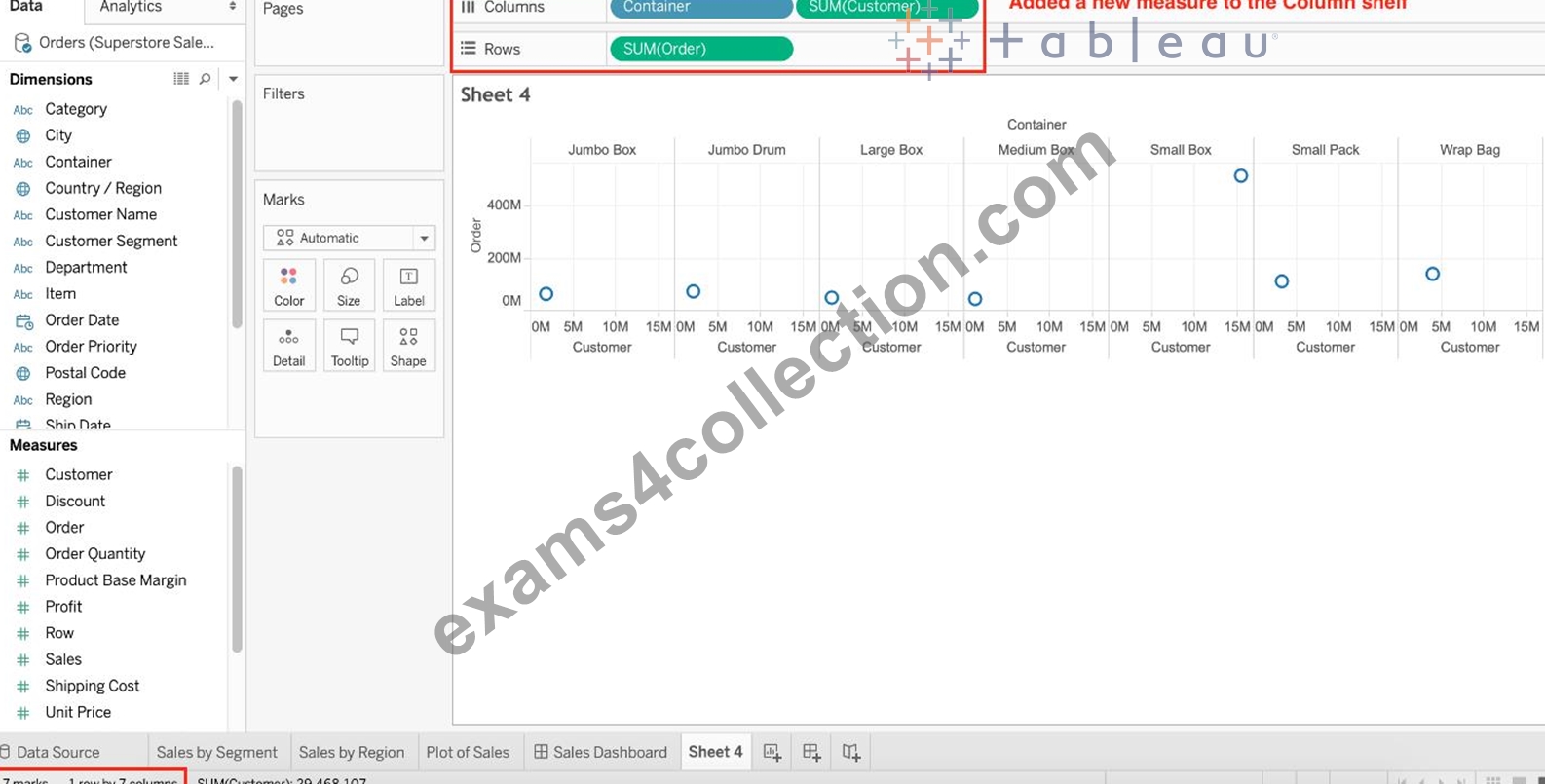
Reference and notes: https://medium.com/@justindixon91/tableau-specialist-exam-notes-part-4-understanding-tableau-concepts-f78de83fdd35
NEW QUESTION # 126
DOWNLOAD THE DATASET FROM - https://drive.google.com/file/d/1F8L_Rl5B9LAz8RDi-DdjWx3Iv-SgzaBq/view?usp=sharing ( if you haven't already from the test instructions page! ) How many different countries are present in the dataset?
- A. 0
- B. 1
- C. 2
- D. 3
Answer: B
Explanation:
To reach the correct answer, follow these steps:
1) You can simply drag Country to the view, and look at the marks in the bottom left of Tableau Desktop - 147 marks!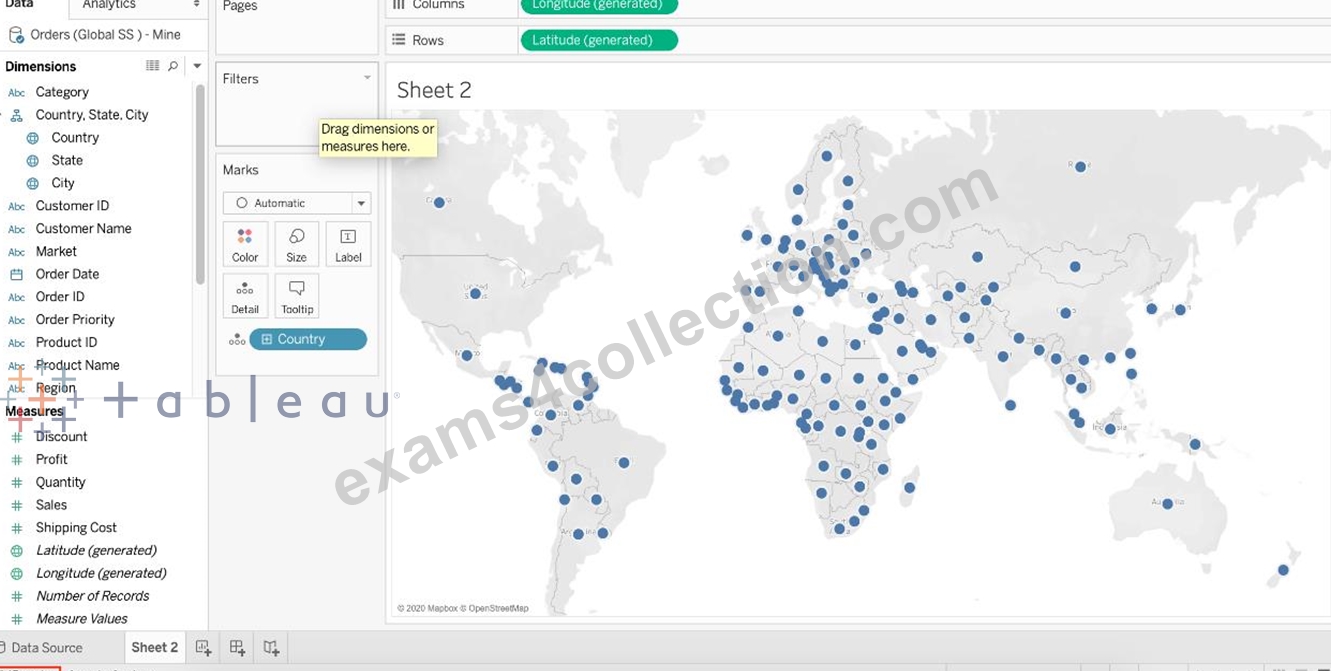
2) Or, you can simply go to Data Source -> Country Tab -> Describe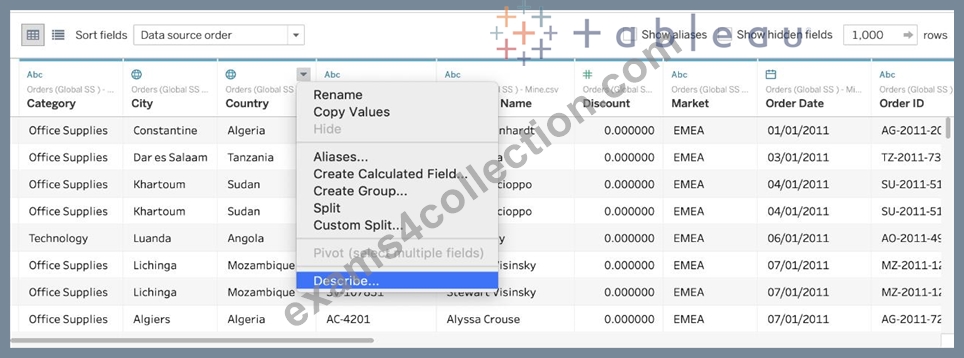
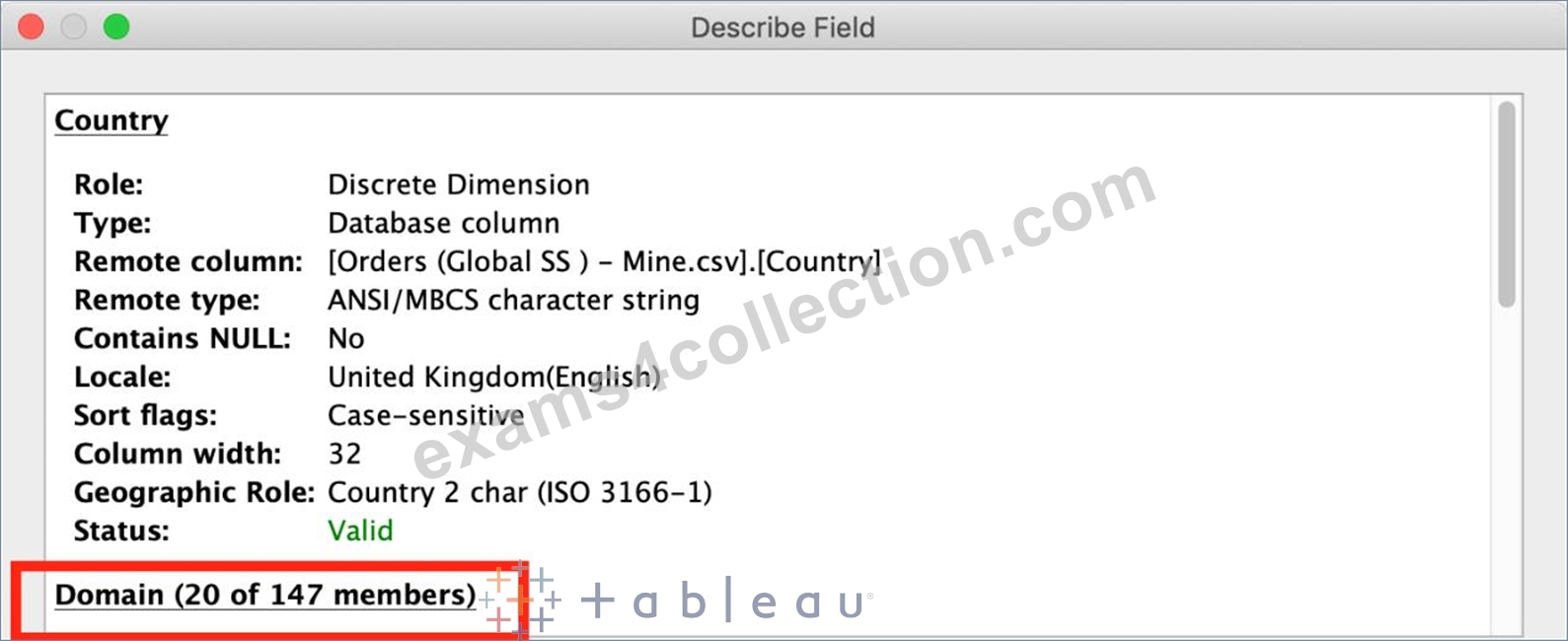
As you can see, 147 members exist in this Country column!
NEW QUESTION # 127
With the Marks card drop-down menu set to Automatic, a line chart will be created whenever you place what on the Rows shelf and the Columns shelf?
- A. Zero or more dimensions on one shelf, and 2 or more measures on the other
- B. Zero or more measures on one shelf, and 2 or more dimensions on the other
- C. A date dimension followed by a continuous measure on one shelf
- D. Measures on one shelf, and a date dimension on the other
Answer: D
Explanation:
According to the Tableau Desktop Specialist Exam Readiness, a line chart will be created whenever you place measures on one shelf, and a date dimension on the other. This is because Tableau automatically recognizes date fields and treats them as continuous dimensions.
NEW QUESTION # 128
What do the colours Blue and Green represent in Tableau?
- A. Continuous and Discrete
- B. Dimensions and Measures
- C. Discrete and Continuous
- D. Measures and Dimensions
Answer: C
Explanation:
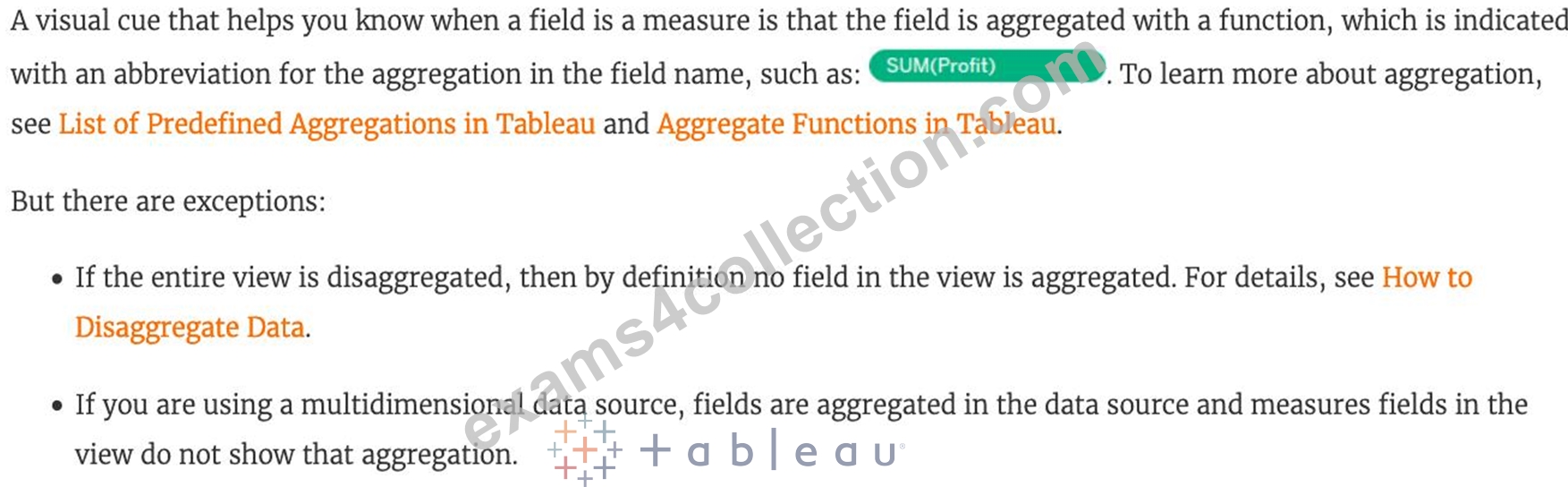
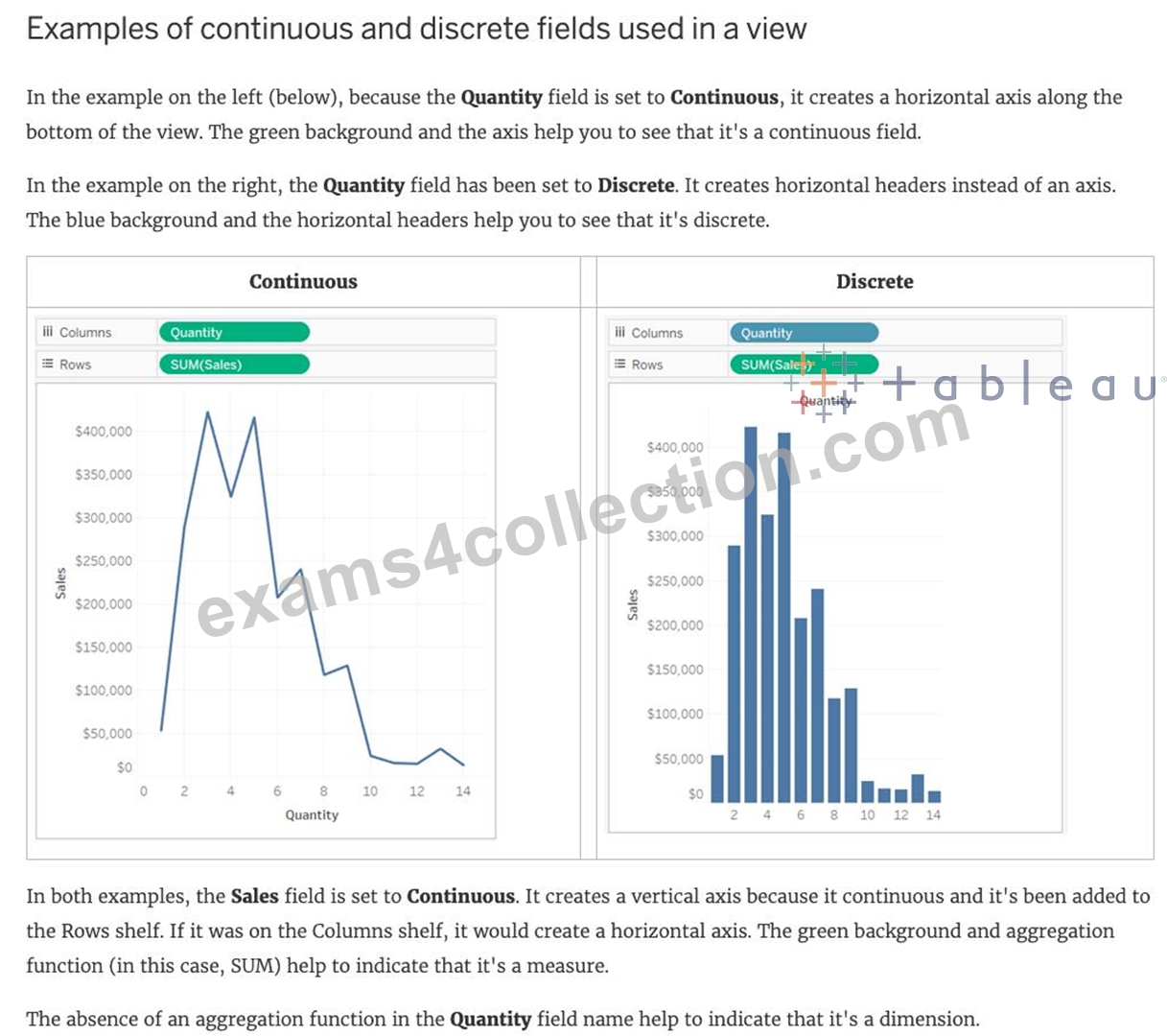
Important question! If you selected Dimension and Measure, don't worry! It is a very common mistake. But we're here to learn aren't we?
When you connect to a new data source, Tableau assigns each field in the data source as dimension or measure in the Data pane, depending on the type of data the field contains. You use these fields to build views of your data.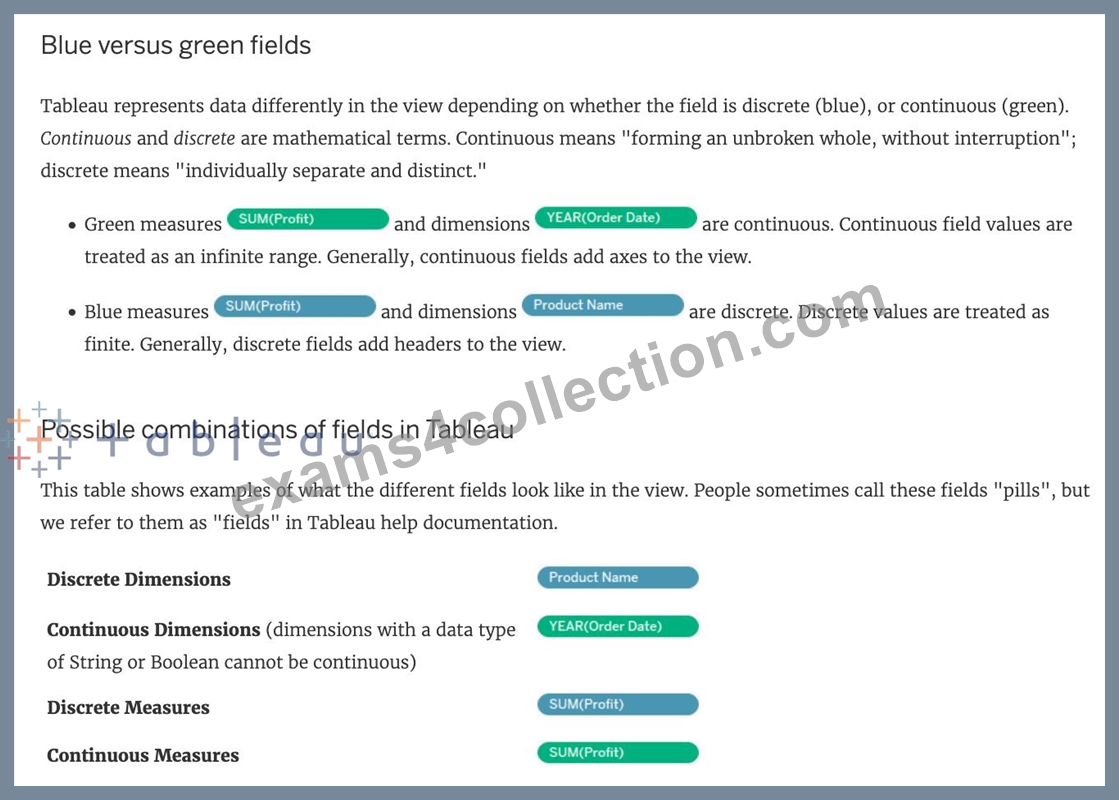
NEW QUESTION # 129
When using the manage metadata option, we can create custom names for columns where _____________ is the original name of the column whereas _____________ is the custom name we created in Tableau.
- A. Local Field, Global Field
- B. Remote Field Name, Field Name
- C. Local Name, Actual Name
- D. Column Name, Actual Name
Answer: B
Explanation:
Explanation
Using the Sample superstore as a reference, click on the manage metadata icon as follows: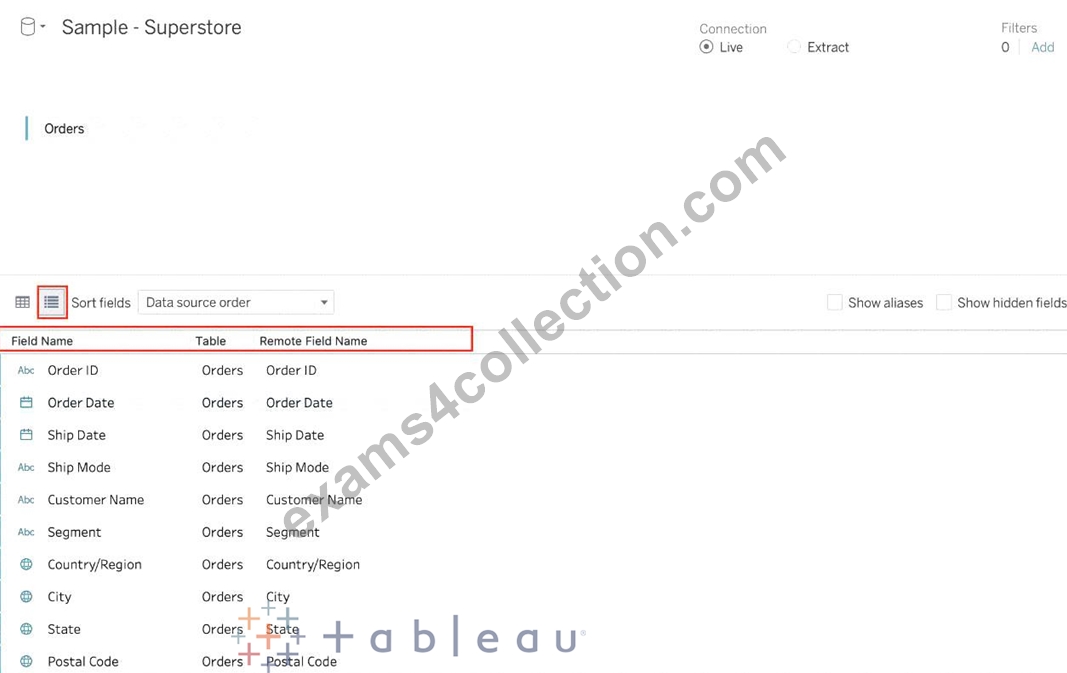
We can rename a particular column name to make it easier to remember and use in Tableau. Let's change Order ID to oID as shown: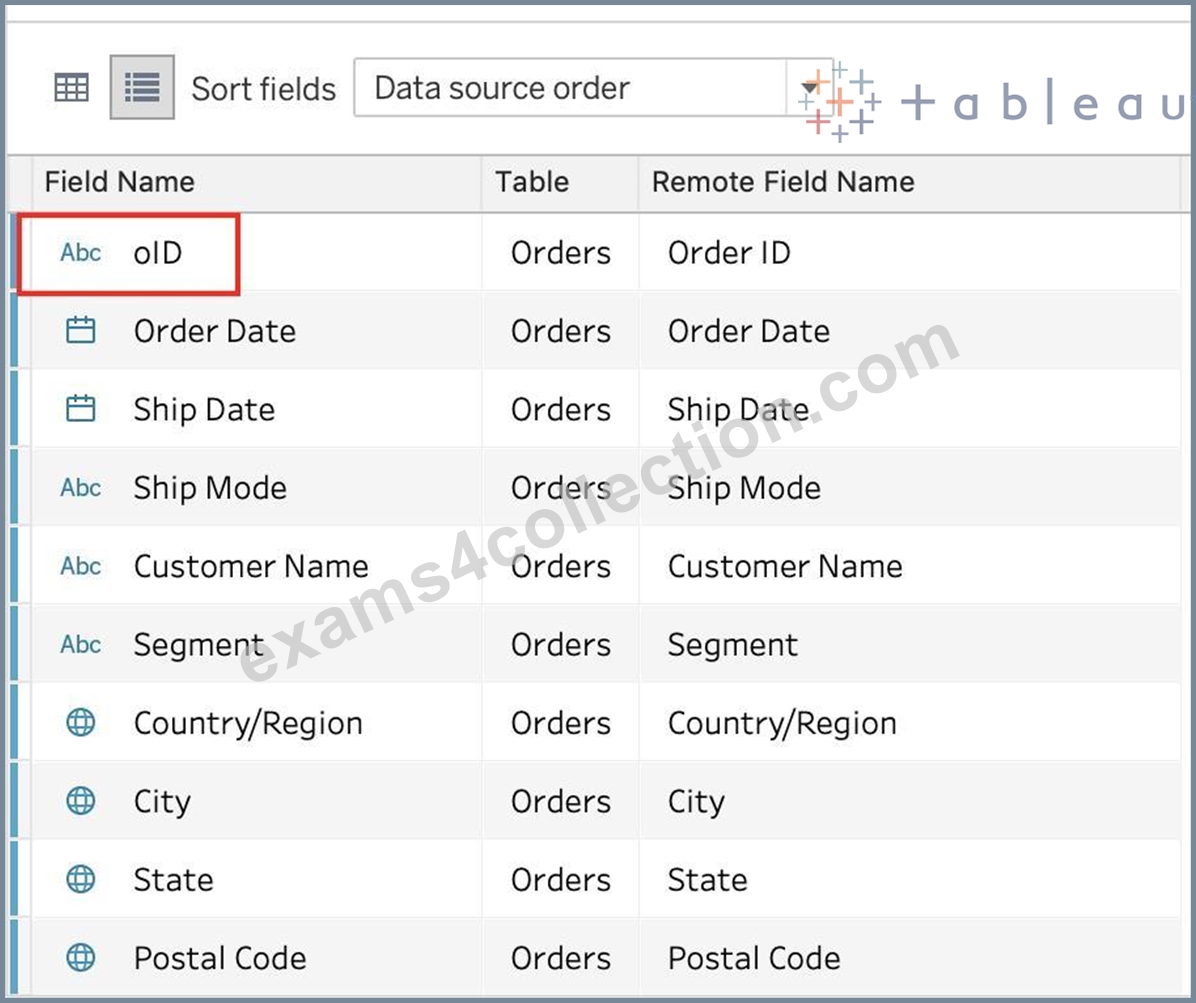
Now, we'll see oID when using this data source in Tableau. This WILL NOT affect the original data source.
The remote field name let's us see what the name of the column is in the ORIGINAL Data source.
NEW QUESTION # 130
Which of the following is a good reason for using a bullet graph?
- A. Forecasting future sales
- B. Comparing the actual sales against the target sales
- C. Displaying the year-on-year growth in sales
- D. Analysing the trend over a given time period
Answer: B
Explanation:
A bullet graph is a variation of a bar graph developed to replace dashboard gauges and meters. A bullet graph is useful for comparing the performance of a primary measure to one or more other measures. Below is a single bullet graph showing how actual sales compared to estimated sales.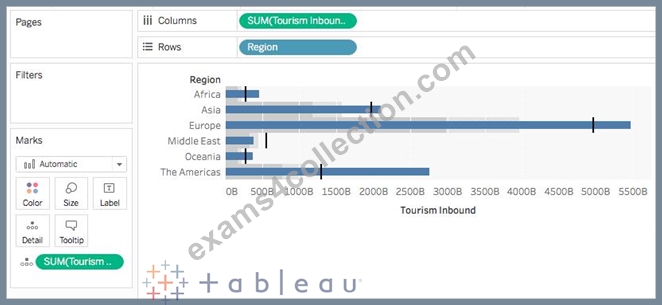
NEW QUESTION # 131
......
Latest Tableau TDS-C01 Dumps with Test Engine and PDF (New Questions): https://easytest.exams4collection.com/TDS-C01-latest-braindumps.html
